Far More Than We Can Imagine…

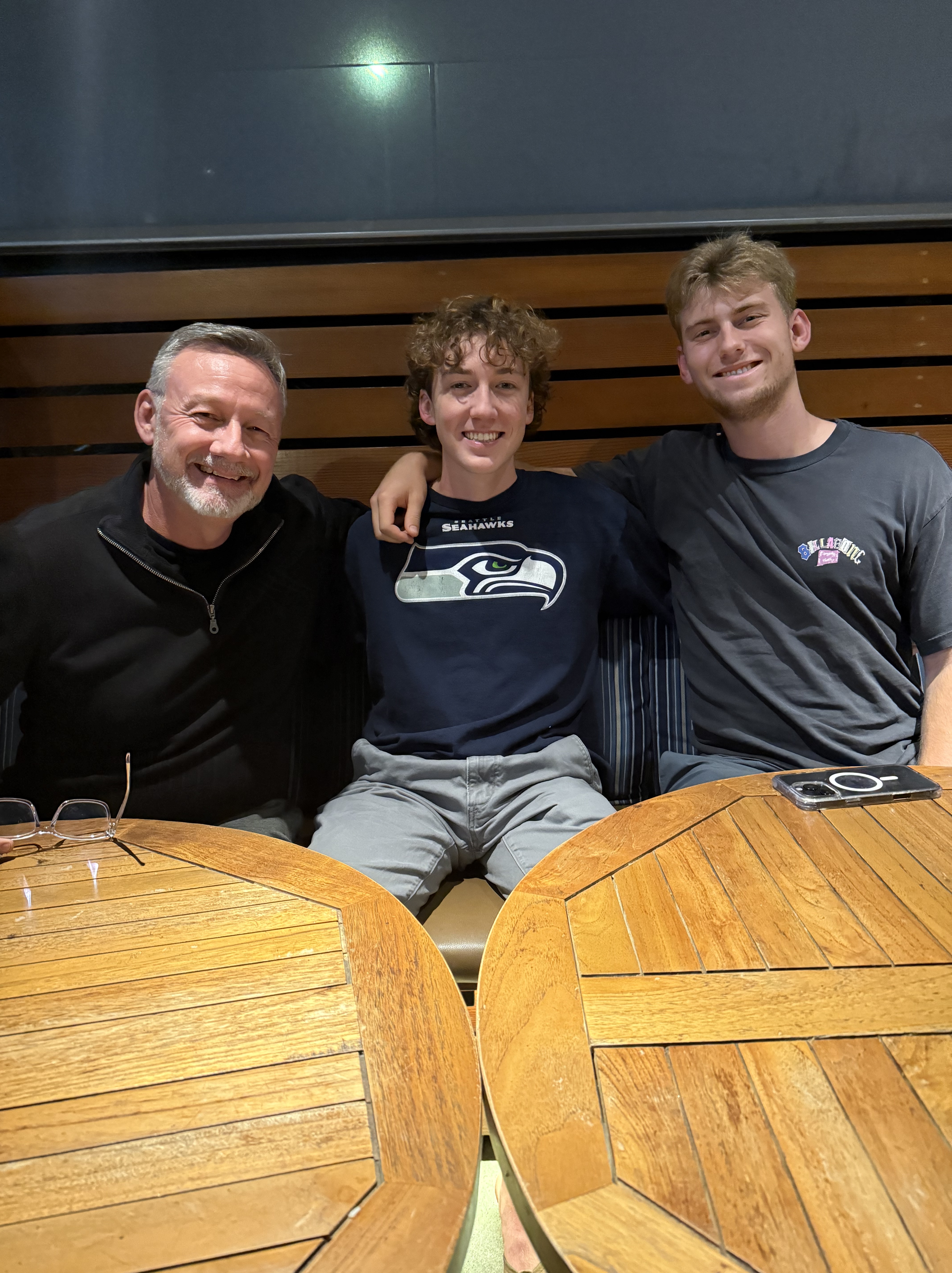
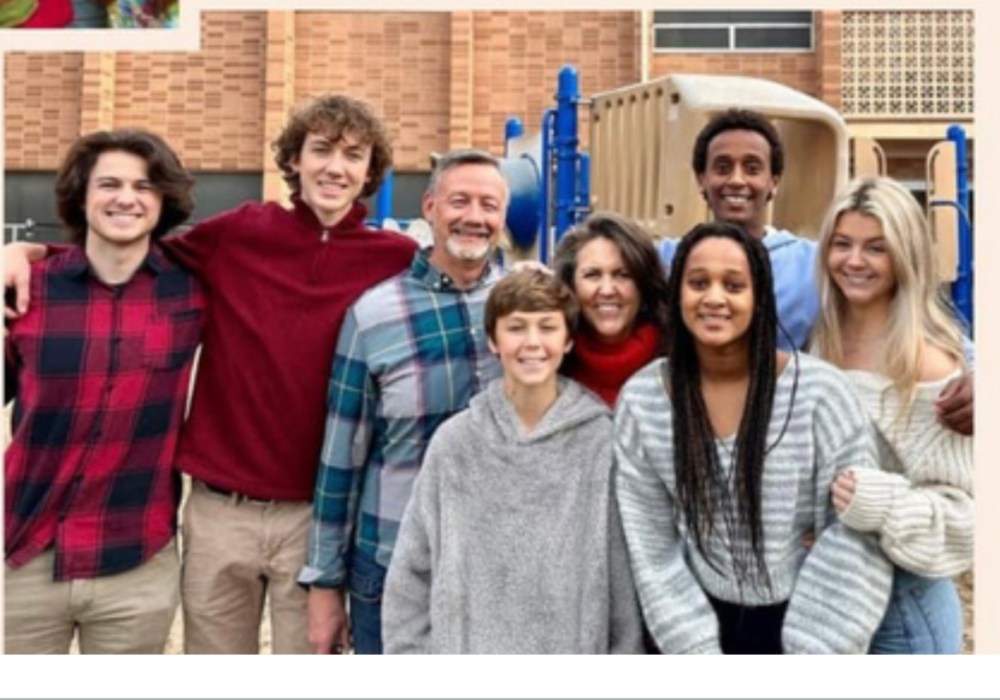
Two years ago, I was preparing to preach my last sermon as senior pastor at Fremont Presbyterian Church, on Christmas Eve 2023 (the picture is from that very day!).  For 25 years, all I had trained for and worked in was that kind of work: being a pastor in a ministry or local church.  I had felt a longing to help those who were doing that kind of work, knowing very well what it was like.  I hoped to be “a pastor to pastors.” I know the challenges, joys, times of loneliness, having a sense of purpose and receiving affirmation, and much more. Two years ago, I didn’t know exactly what that work would look like, or who would want or need it.  

I see things differently now!  I am reminded of the words of Paul in his letter to the Ephesians:  

Now to him who is able to do immeasurably more than all we ask or imagine…”

As we come to the end of 2025, I want to THANK YOU for considering supporting me in helping make my work possible.  You know I can’t share names, details, or photos of the people I’m caring for and coaching.  The confidentiality is important.  But the stories I hear are tragic, joyful, bewildering, inspiring, and hopeful. I often hear phrases like this:

“You’re the first person I’ve told this to…”

“I’ve never said this to anyone before.”

“I didn’t know who I could trust.”

I am now meeting on at least a monthly basis with: 

30 leaders, in 9 U.S. states and 4 countries.

They are:

10 associate pastors

9 senior or lead pastors

1 church planter

3 work in the marketplace

7 work in parachurch or other non-profit

I often receive calls from pastors, just needing to talk, run a leadership challenge by me, or celebrate a new development.

I check-in monthly with an additional sixteen leaders who serve with Standing Stone, in a new role as an Area Leader.  

I help lead two cohorts that meet monthly for encouragement and training.  One is a group of local pastors, and the other is a group of younger leaders who serve in various leadership roles in local non-profits. 

I am assisting an organization called The Barnabas Group vet new non-profits, both locally and internationally, that receive support and organizational problem-solving from local business leaders.  I also facilitate “ideation sessions,” where 8-10 business leaders help the executive directors of these non-profits move their organization forward in its mission.

Looking ahead to 2026!

Would you consider helping this work in 2026?  In order to keep up with what I’m doing, I have a goal of 10 new monthly donors in 2026.  

I understand that some people like to give one-time a year, and I would welcome annual giving as well!

If you serve an organization that can give matching gifts, would you consider asking?

If you serve a church with a budget to give towards new ministry, would you consider adding Standing Stone as a partner?  

If you’ve been blessed with a surplus in 2025, perhaps part of it could help support this work?

Please go to my giving page:

Look for a new Christmas picture of our whole family sometime soon!  We are traveling out to visit Hudson, my mom, and brother in the Washington, D.C. area for Christmas this year, and will take a new picture then!

Merry Christmas!

Help The Hidden Work

On this Giving Tuesday, I want to ask for your help. Help me continue this work I am doing in providing confidential care and coaching for pastors, ministry and marketplace leaders.

I currently meet with 30 leaders on a regular basis.

  • They live in 9 U.S. states
  • 4 international countries
  • 10 are associate pastors in local churches
  • 9 are senior or lead pastors in local churches
  • 1 is planting a church
  • 7 work in organizations outside the local church
  • 3 work in the marketplace

Two years ago, a spiritual director said to me, “It sounds as if you are longing for the hidden work of deeper discipleship.” I have never forgotten those words. Two years later, I can say that these one-on-one and small-group conversations I get to have are hidden, but fruitful. I can’t show you the pictures of everyone I meet. But I get to offer what I do to these leaders who otherwise may not seek out this kind of help for FREE. It is the generosity of 96 people over those two years that have made that possible. Would you consider joining this team of ministry partners?

As the year comes to an end, I have a goal of raising $10,000 in one-time gifts, and $750 in new monthly giving. All gifts are tax-deductible. Click on the link below, and then on the button marked “Donate” to make a gift.

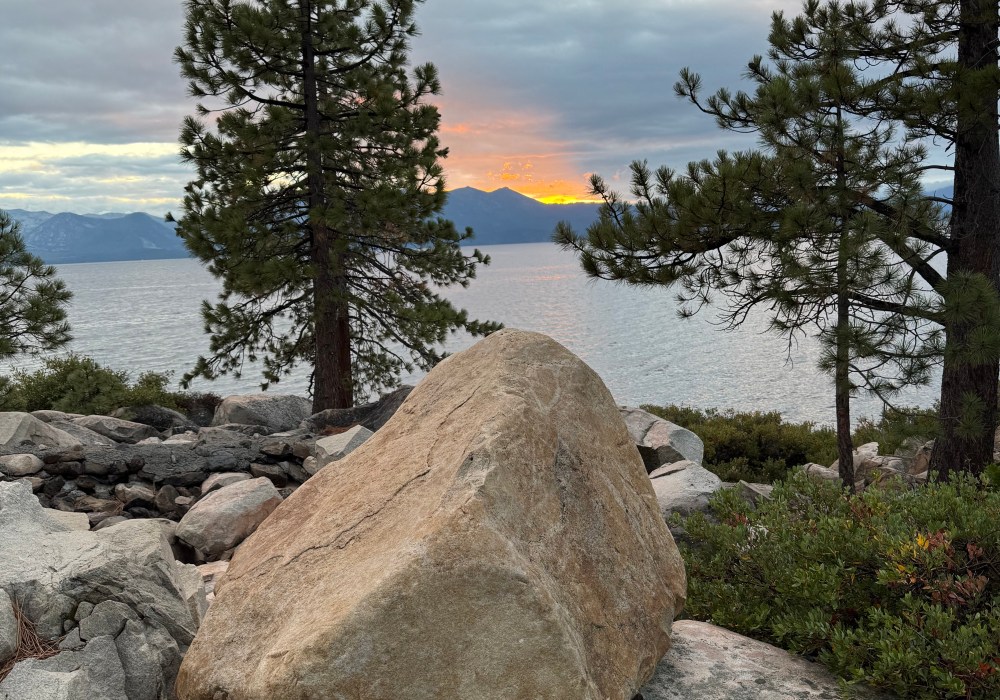
[By the way, in the picture above, there is some wildlife hidden. Can you see them? One happens to be looking right at the camera. Hopefully the resolution is good enough to see them…]

I am serving with a ministry called Standing Stone, which has aimed for over twenty years to provide a space for free, confidential coaching and care for pastors, ministry leaders, and leaders of every sphere. Standing Stone believes that healthy leaders need companions on their leadership journey, and that healthy leaders will lead healthy organizations that help transform their communities. You can learn more here: https://standingstoneministry.org/shepherd/burke-david/


Transient Global Amnesia

I was in the hospital last week. It was not expected. I was going about my day of meetings, returned home, and began to feel a bit unusual. I felt confused, with some difficulty remembering things. Kelsey suggested me calling my doctor. The next thing I remember, I was on a video call, with Kelsey by my side, and the nurse suggested we go to the hospital. Once there, I described my symptoms to a group of doctors and nurses, with some help from Kelsey. A battery of tests followed—an MRI, CT scan, X-ray, bloodwork. To be safe, they kept me overnight. The next day, a neurologist ran some more tests, including an EEG. According to all those tests, they find me in good health.

It turns out I suffered my second episode of “transient global amnesia.” You can look it up. Each doctor told me that what is interesting and frustrating about this diagnosis are these things:

  • There is no certain cause.
  • There is nothing necessarily to be done to prevent it
  • It is likely it will never happen again, as I have had two of these episodes now. (the first one was a few years ago).  It is extremely rare to happen a third time.

The main experience of the episode, which lasts several hours, is an inability to remember things in the short-term. I kept asking Kelsey the same questions, like “Why am I here in the hospital?” “How much longer will I be here?” But the underlying experience for me was a feeling of being completely out of control. 

I don’t think of myself as someone who “needs” to be in control (though I’m sure I am unaware of many places where I live differently!). But, I can honestly say I really didn’t like the feeling of being so out of control. To be unaware that I had just asked the same question of Kelsey moments before was very disconcerting, even embarrassing. To not know how long I would be kept in the hospital, to simply wait for the next test, the next doctor to visit, all was very uncomfortable, to say the least.

Some of you have had a similar experience, I’m sure. Or you care for someone who is battling a chronic disease. You are well aware of medical tests and treatments, doctors and nurses, hospitals, and waiting. And with that, the feeling of being out of control. 

The leaders I meet with often speak of this same experience. Not transient global amnesia, of course. But being out of control. In other words, they have this persistent sense they don’t have the agency to make necessary changes. Whether it be in their work-life balance, or their organizations. They report to me that it is sometimes a crisis that reveals how little control they truly have. Most of the leaders I serve primarily work with people. It is interesting how often the causes of this “out of control” feeling are the unexpected behaviors and decisions that other people make, and their reactions to their leadership. These leaders say something or change something, and find themselves all of a sudden in a maelstrom of hostility. What should they do in such a situation? Often I try to point out to those I am listening to how they are reacting to that sense of loss of control, and where they may be simply trying to seize more control. 

Unlike my trip to the hospital, where I sent through a battery of tests to declare me “healthy,” leaders do not necessarily have something like a “leadership EEG” to declare them healthy. And, truth be told, every leader has areas of unhealth in them. Good leadership depends on wise counsel from mentors, coaches, co-workers, and board members to speak into their patterns of leading, diagnosing and pointing out the unhealthy parts, and prescribing the right things to bring health again. 

END OF YEAR CAMPAIGN

I want to humbly ask if you would be willing to give towards my year-end goal, to help keep doing this work of providing care and coaching for leaders. I am aiming to raise $25,000 in one-time gifts, and a $1,000 increase in monthly giving. Reaching those two goals will keep in the “fully-funded” category for 2026.  I can tell you what a gift it is to be able to offer this coaching and care for free to many leaders. I have also received a generous offer from a new donor who will match up to $1,000 in new or renewed gifts. If you as an individual, or the company you work for has a matching gift program, or the church you attend or serve would be willing to consider giving at year-end or as part of the budget for 2026, I would be extremely grateful. Click on the link below!

I am serving with a ministry called Standing Stone, which has aimed for over twenty years to provide a space for free, confidential coaching and care for pastors, ministry leaders, and leaders of every sphere. Standing Stone believes that healthy leaders need companions on their leadership journey, and that healthy leaders will lead healthy organizations that help transform their communities. You can learn more here: https://standingstoneministry.org/shepherd/burke-david/

Home.

After being away from home for 13 out of the last 24 days, it is good to be home.

My time away has been both personal and professional:

  • Speaking at a men’s retreat in Lake Tahoe for two churches.
  • Parents’ weekend at San Diego State University, visiting our daughter McLean
  • Speaking at a pastors’ retreat for 25 leaders in Grass Valley, CA.  
  • Performing a wedding for a good friend in Pasadena, while squeezing in dinner with our son Crew (and roommate Eric!) at UCLA. 

Each place was beautiful in its own way.  But home is where I love to be.

When we are away from the place where we have a routine and a certain amount of the comforts of home, we begin to long for those things.  

When I spoke to the pastors at their retreat, one of the things we talked about was how hard it was for them to be “on” in so many places and for so many people.  I think one of the beautiful things about home is that we can let that go away for a time.  We talked about finding people and places where you feel “at home.”   

My hope is to be a place of “home” in conversation with these leaders.  Where they can be fully themselves.  Where they don’t have to be on.  Where they can relax and let go of the anxiety of leadership for a while.

Thank you for making this work possible.  As I approach the end of the year, I still need $25,000 in one-time or renewed annual giving to remain fully funded.  Many generous people helped me get there in 2024, and I hope that new people will join in this partnership to help leaders stay healthy and lead healthy work for their churches, non-profits and businesses.  If you as an individual, or your church, organization, or business, would like to support this work, I’d love to talk to you!      

I am serving with a ministry called Standing Stone, which has aimed for over twenty years to provide a space for free, confidential coaching and care for pastors, ministry leaders, and leaders of every sphere. Standing Stone believes that healthy leaders need companions on their leadership journey, and that healthy leaders will lead healthy organizations that help transform their communities. You can learn more here: https://standingstoneministry.org/shepherd/burke-david/
Selfish

This is a word I am hearing in conversations with leaders lately.  As in, “I don’t want to be selfish.” They go on to often talk about a dream, a passion, something for which they had more time.  When I ask them what is keeping them from pursuing those things, they often respond with this:  “I don’t want to appear selfish.”  It’s an interesting response.  After hearing it so often, I want to respond like the character Inigo Montoya to Vizzini in The Princess Bride: “I do not think that word means what you think it means!”

The picture above is what we often think of when we picture being “selfish.”  Children fighting over a toy.  Looking out only for their own interests and wants.  (I looked at a lot of images, but kept coming back to this one!)  

That is what makes the response of the leaders I meet with so interesting.  I hear a good dream and a deep passion, one that helps use the gifts of the leader and has the potential to bless many others.  It’s nothing like fighting over a toy, or just looking out for their own wants. Yet there is something in many leaders that feels like pursuing their dream is “selfish.”  Perhaps it is their current job description and daily responsibilities.  Or, their tendency to think of the health of the organization first, and their own wants much lower down the list.  Going deeper, I find that there is a core belief hidden in them that they actually don’t deserve to pursue their passions and dreams.  Whatever the reasons might be, often these beautiful visions are left untouched, because to do so is seen as “selfish.” 

I’m not necessarily speaking about those women and men who make sacrifices for others, whether it be a spouse, children, or extended family.   Placing dreams “on hold” for loved ones is a part of serving and loving others well.  But I’m hearing something different when I hear leaders say their dreams are “selfish.”  It isn’t the stage of life holding them back; it is a deeply held belief that comes from somewhere else. 

What about you?  What dream or passion have you left behind, because you once felt it was selfish to do so?  

I am serving with a ministry called Standing Stone, which has aimed for over twenty years to provide a space for free, confidential coaching and care for pastors, ministry leaders, and leaders of every sphere. Standing Stone believes that healthy leaders need companions on their leadership journey, and that healthy leaders will lead healthy organizations that help transform their communities. You can learn more here: https://standingstoneministry.org/shepherd/burke-david/

The Case For Coaching

I’ve had coaches that have changed my life. That is not an exaggeration. They listened well. They asked powerful questions. They noticed when I kept using certain words or phrases, being curious about why those were so important. They introduced me to tools and concepts that revealed blind spots in me. They helped me discern major transitions. My coaches’ presence and influence in my life are a part of the reason why I wanted to coach.

Football season has kicked off, and with it, came the debuts of some coaches.  It’s a very tough profession, as every game can lead to media pundits speculating who is on a “hot seat” and in danger of losing their job.  I drive a carpool for my middle-school son and two friends every morning, and we often listen to sports radio. I have often asked these guys in the car, “Can you imagine being talked about every morning on the radio–your failures being analyzed over and over again, and broadcast to thousands of people?” Certainly resilience and short-term, “goldfish-like” memory, are needed in this line of work.

What is the gift that good coaching brings?  How do we measure coaching, especially when the metrics aren’t obvious in a win and loss column? Can coaches actually help leaders flourish?

Consider some recent research on one group of leaders—local church pastors:    

In Barna’s recent report, The State of Pastors, Volume 2, data shows that pastors are struggling the most with their mental and emotional well-being—just 17 percent are flourishing in this area. Relational flourishing is the next lowest, with just a quarter of pastors (25%) scoring well in this area. Financial flourishing sits at 41 percent, and just under half of pastors (48%) are flourishing in their vocation.

Some of you may be asking: What does flourishing mean?

Barna partnered with Harvard Human Flourishing to outline a number of life categories:  spiritual, mental, emotional, financial, and vocational.  Flourishing refers to a holistic measure of someone’s life across multiple dimensions—Barna uses the term “whole person health.” There is an interconnectedness of these practical domains in our lives.

The research on pastors by Barna shows this:  that while pastors score high in terms of spiritual flourishing (75%), nearly every other category scores much lower.  

When you combine this with other data that shows the respect or perceived authority of pastors within society declining—it once was 65% and now is around 45%—and that over 60% of pastors describe themselves as experiencing regular feelings of loneliness, the picture of pastoral flourishing is troubling. 

This begs a series of questions:  what exactly is happening? Are pastors so focused on certain aspects of their work that they are neglecting other dimensions of their lives, leading to lower reports of flourishing?  Are pastors not embracing their human limitations and believing unrealistic expectations of what they are to do? Are there systemic issues within the role of being a pastor in North America that lead to a lack of flourishing?  What can be done about it?

The answers are multifaceted and complex. But mentoring and coaching are part of the solution. Empirical studies in youth and education, medical training, sports, executive coaching and the workplace all find the same thing: having a mentor or coach reduces burnout and increases fulfillment, psychological safety, and individual and organizational flourishing.

I hope that this doesn’t come across simply as a “case for what I do.”  Instead, I can tell you from the past year of doing this work that I see the need, and the benefit, of a trusted coach or mentor in the lives of leaders.  The leaders I meet with show up for meetings, in-person and virtually, eager to talk.  They report back with excitement when an idea we’ve discussed gets implemented and succeeds.  They express gratitude for images and metaphors we’ve developed together that help them stay healthy.

Ask yourself this:  whatever job you have, or had in your life:  how might a coach have helped you grow in that role?  How did a coach help you grow in that role? 

I am serving with a ministry called Standing Stone, which has aimed for over twenty years to provide a space for free, confidential coaching and care for pastors, ministry leaders, and leaders of every sphere. Standing Stone believes that healthy leaders need companions on their leadership journey, and that healthy leaders will lead healthy organizations that help transform their communities. You can learn more here: https://standingstoneministry.org/shepherd/burke-david/

Support System

Leaders need a healthy support system. And, it seems that pastors and ministry leaders might be uniquely challenged to find such support. Consider this from a recent article by Barna Research: 

“Recent research highlighted in Barna’s State of the Church initiative uncovers some concerning patterns: half of all pastors receive no professional support, and their lowest flourishing scores appear in areas where human connection matters most—relationships and well-being.”

The Barna research included mentors, advisors, coaches and counselors in their definition of support.  The relationships I have with leaders are a mix between coaching, counseling, spiritual direction, and mentoring.  It all depends on the person.  What I love about serving within Standing Stone is that I know I have a network of trained therapists, counselors, and spiritual directors I can call on if I sense that the leader I am meeting with needs more particular support.

Now, after doing this work for the past 18 months, I have found this to be true:  pastors, ministry leaders, non-profit leaders, and businesspeople need this support system.  

Cohorts!

Cohorts also provide support!  The two pictures above are from the last week.  The top one is the group of Sacramento-area pastors I have been meeting with for the past year. This is from our annual retreat on a night we went out to dinner together. Together with fellow Standing Stone staff member Kyle Waggoner, we meet monthly for sharing stories, leadership conversations, encouragement, challenge, and sharpening one another.

The bottom picture is from a new group that just began meeting last week.   Brian Dowd, founder of Next Step Coach and managing partner of The Barnabas Group, invited me to co-lead this group of younger parachurch leaders.  It’s called the “Rising Leaders” program, a new initiative aimed at helping equip the next generation of leaders already serving in ministries like Young Life, World Relief, Youth For Christ, and local homeless and recovery organizations.  

Recovery Update: With two kidney surgeries and two endoscopies behind me, I am feeling much better!  Thank you for your prayers and messages you sent while I was recovering.  

Fundraising Update: Thanks to a handful of new monthly donors, the generous ministry partner who offered to match the gift has matched those gifts, and says, “Keep going!”  He is still willing to match up to $175 more per month in new monthly gifts.  I had 24 people give a one-time gift in 2024, and I am contacting them to see about giving again in 2025.  If you are one of those people, would you consider giving a monthly gift that would be matched? Over 44% of my 2024 support came from one-time or annual gifts.  I have received nearly 40% of that so far in 2025. If you have not given yet, would you consider giving monthly to help reach the matching goal?  You are my support system!  THANK YOU FOR BEING MY SUPPORT SYSTEM!

I am serving with a ministry called Standing Stone, which has aimed for over twenty years to provide a space for free, confidential coaching and care for pastors, ministry leaders, and leaders of every sphere. Standing Stone believes that healthy leaders need companions on their leadership journey, and that healthy leaders will lead healthy organizations that help transform their communities. You can learn more here: https://standingstoneministry.org/shepherd/burke-david/
The Gift of Free

We recently had a yard sale. A water leak in kitchen led to warped flooring, which led to new flooring, which led to a kitchen re-do, which led to us having a bunch of stuff in our garage, which led to a yard sale. You get it. The picture above is the aftermath of the sale. But before that, we had the driveway full of items, with shoppers coming as early as 6am. There were several moments where we just told people who asked about an item, “That’s free.” Amidst a sea of items where one expects to pay, what does “free” feel like? 

I’ll tell you. I was referred to some leaders recently who have never talked about their stories with anyone. For decades of leadership and service. Who can they trust? How hard it is to admit they needed help? And, how could they afford it? When I told them that I get to offer this service for free, they were amazed. The look on their faces is a gift.

You’re one of the reasons why I get to see that look on their faces. 

From its beginning, Standing Stone has remained committed to offering this confidential coaching and care of ministry leaders for free. Even its founders, Jim and Debbie Hogan, raise their own financial support to do their work of coming alongside pastors and ministry leaders. They have long known how there are already so many barriers to leaders reaching out for help, and cost is only one of them. If each of us can call upon a group of people to support our work, then we can offer the gift of free those that need it. 

A generous partner continues to offer a matching gift to new monthly donors. If you have given once, or never given, and could commit to giving monthly, your gift will be matched!

I am serving with a ministry called Standing Stone, which has aimed for over twenty years to provide a space for free, confidential coaching and care for pastors, ministry leaders, and leaders of every sphere. Standing Stone believes that healthy leaders need companions on their leadership journey, and that healthy leaders will lead healthy organizations that help transform their communities. You can learn more here: https://standingstoneministry.org/shepherd/burke-david/
Recovery.

I recently had surgery, and in a few days, will have another one.  When I went about informing people that I would be taking some days off to recover, everyone seemed to understand.  “Get better soon!”  “Hope all goes well!”  “Take the time you need!”  “No rush!”  We all understand the need for physical recovery. 

But what about other kinds of recovery?

Emotional?

Mental?

Spiritual?

I think our culture has made some headway in understanding emotional and mental health.  And more attention is being directed towards spiritual health. But speaking out loud about the need for these other kinds of recovery can be very difficult.   With the pastors and leaders I am listening to, their expressing a need for recovery can be risky. Asking for time off can be seen as weakness, and people may perceive them as not being “cut out” for this kind of leadership.  Some of it can be attributed to an ignorance of what pastors and ministry leaders do. There are still people who assume, for instance, that pastors only “work one day a week.”  

I read this article this morning about celiac disease (which I have), and I thought this particular segment applied here:  

People often report being dismissed or misunderstood when they say they feel mentally impaired after eating gluten. Employers, teachers, and even family members may not believe them or may assume it’s psychological.But acknowledging that the “glutened brain” is rooted in biology helps validate their experience. (article here).

What does this have to do with the need for recovery in leadership?  I found it interesting that those that report feeling “brain fog,” or mental impairment, or exhaustion assume it’s “psychological.”  But note how the idea that something is “rooted in biology” is more validating.  Does labeling things as “psychological” imply they are less valid?

As we are made in the image of God, I believe our physical, mental, emotional, psychological and spiritual selves are all valid.  Recovery for all those parts is vital. 

A personal illustration: I found towards the end of my work as a pastor that I often could not even remember what I spoke about the Sunday before.  I had learned to move on to the next week very quickly.  There was little recovery time, because “Sunday’s comin’!”  Pastors have been doing this for decades.  Many pastors have no choice but to keep plugging along, doing their best.  

Each profession and occupation, I’m sure, has its analogous experiences.  There are seasons of intense busyness, whether it be project completion, launch of new products, budget approval, going to trial, exam taking and grading—the list could go on and on.

The question for all of us is this:  

When we will validate the need for recovery time for ourselves and our teams?

MATCHING GIFT OPPORTUNITY

If you have never given, given once, or given annually, and would like to shift to monthly giving, you can have your gift matched!  A generous donor has offered to match new monthly gifts, and there is still time to do this! Click here to donate.

I am serving with a ministry called Standing Stone, which has aimed for over twenty years to provide a space for free, confidential coaching and care for pastors, ministry leaders, and leaders of every sphere. Standing Stone believes that healthy leaders need companions on their leadership journey, and that healthy leaders will lead healthy organizations that help transform their communities. You can learn more here: https://standingstoneministry.org/shepherd/burke-david/

Easy…Like Sunday Morning?

I frequently ask pastors, “How was last Sunday?”  Some of these leaders are not in the primary preaching or speaking role, and they might say: “It was easy, because I wasn’t preaching, so I just greeted people and helped here and there.”

But I know better. Sundays are anything but easy for pastors.

Imagine this: You walk into the sanctuary or worship meeting space, and instantly see:

The person who just finished their last chemotherapy treatment.

The person you saw in your office earlier that week that lost their job.

The couple whose wedding you officiated, that just returned from their honeymoon. 

The author of that unfair email.

A family you don’t recognize, and you make a mental note to make sure you welcome them and introduce yourself.

The person who always wants to use brief moments to tell long, awkward stories and you’re worried that if you engage them, you won’t ever get to the new family

I could go on and on.  Every Sunday, pastors are doing things that no one else sees, even when it doesn’t look like they’re doing much.  Internally, their dialogue can sound like this:

Be welcoming.

Be patient.

Be helpful.

Be caring and compassionate.  

Be available. 

Be bold (for instance, asking someone to help).

Pastors are constantly scanning the crowd for needed connections, new visitors, care follow-up, and asking versions of “How are you…really?” without breaking confidence in front of others. They make mental notes of who is there and who isn’t there.  They make more mental notes after brief interactions, trying to remember to continue unfinished conversations.   And much, much more. Sounds easy, right?  

I hope to bring that kind of understanding to pastors— that I see what others may not see.  And that their hidden work of navigating the joys and sorrows in others’ lives, all in the span of a few hours on a Sunday morning, is anything but easy.  

I am serving with a ministry called Standing Stone, which has aimed for over twenty years to provide a space for free, confidential coaching and care for pastors, ministry leaders, and leaders of every sphere. Standing Stone believes that healthy leaders need companions on their leadership journey, and that healthy leaders will lead healthy organizations that help transform their communities. You can learn more here: https://standingstoneministry.org/shepherd/burke-david/