Selfish

This is a word I am hearing in conversations with leaders lately.  As in, “I don’t want to be selfish.” They go on to often talk about a dream, a passion, something for which they had more time.  When I ask them what is keeping them from pursuing those things, they often respond with this:  “I don’t want to appear selfish.”  It’s an interesting response.  After hearing it so often, I want to respond like the character Inigo Montoya to Vizzini in The Princess Bride: “I do not think that word means what you think it means!”

The picture above is what we often think of when we picture being “selfish.”  Children fighting over a toy.  Looking out only for their own interests and wants.  (I looked at a lot of images, but kept coming back to this one!)  

That is what makes the response of the leaders I meet with so interesting.  I hear a good dream and a deep passion, one that helps use the gifts of the leader and has the potential to bless many others.  It’s nothing like fighting over a toy, or just looking out for their own wants. Yet there is something in many leaders that feels like pursuing their dream is “selfish.”  Perhaps it is their current job description and daily responsibilities.  Or, their tendency to think of the health of the organization first, and their own wants much lower down the list.  Going deeper, I find that there is a core belief hidden in them that they actually don’t deserve to pursue their passions and dreams.  Whatever the reasons might be, often these beautiful visions are left untouched, because to do so is seen as “selfish.” 

I’m not necessarily speaking about those women and men who make sacrifices for others, whether it be a spouse, children, or extended family.   Placing dreams “on hold” for loved ones is a part of serving and loving others well.  But I’m hearing something different when I hear leaders say their dreams are “selfish.”  It isn’t the stage of life holding them back; it is a deeply held belief that comes from somewhere else. 

What about you?  What dream or passion have you left behind, because you once felt it was selfish to do so?  

I am serving with a ministry called Standing Stone, which has aimed for over twenty years to provide a space for free, confidential coaching and care for pastors, ministry leaders, and leaders of every sphere. Standing Stone believes that healthy leaders need companions on their leadership journey, and that healthy leaders will lead healthy organizations that help transform their communities. You can learn more here: https://standingstoneministry.org/shepherd/burke-david/
The Case For Coaching

I’ve had coaches that have changed my life. That is not an exaggeration. They listened well. They asked powerful questions. They noticed when I kept using certain words or phrases, being curious about why those were so important. They introduced me to tools and concepts that revealed blind spots in me. They helped me discern major transitions. My coaches’ presence and influence in my life are a part of the reason why I wanted to coach.

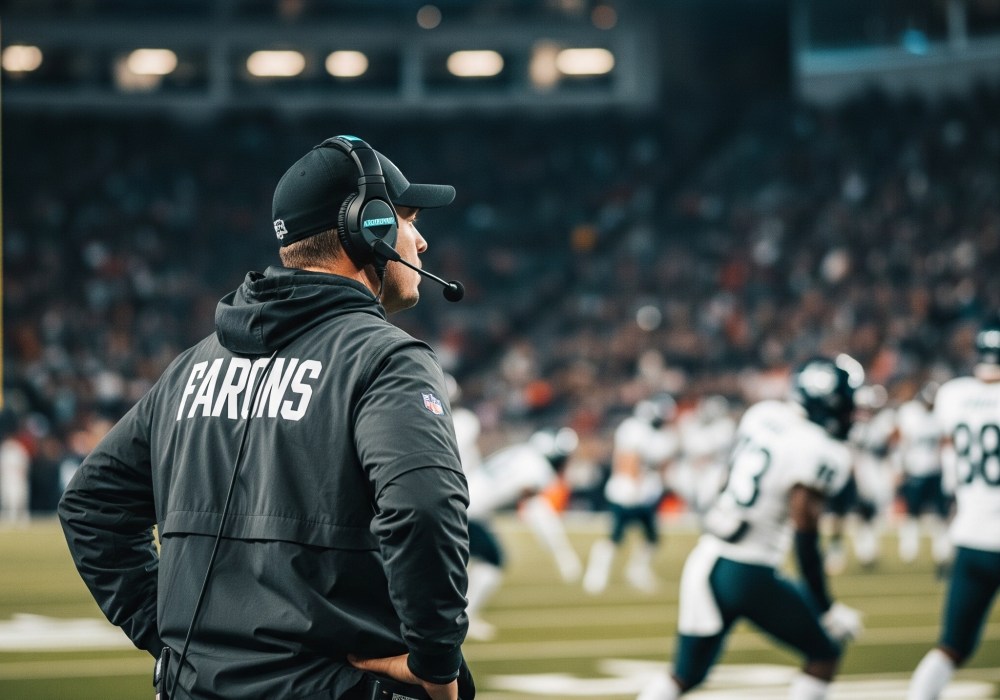
Football season has kicked off, and with it, came the debuts of some coaches.  It’s a very tough profession, as every game can lead to media pundits speculating who is on a “hot seat” and in danger of losing their job.  I drive a carpool for my middle-school son and two friends every morning, and we often listen to sports radio. I have often asked these guys in the car, “Can you imagine being talked about every morning on the radio–your failures being analyzed over and over again, and broadcast to thousands of people?” Certainly resilience and short-term, “goldfish-like” memory, are needed in this line of work.

What is the gift that good coaching brings?  How do we measure coaching, especially when the metrics aren’t obvious in a win and loss column? Can coaches actually help leaders flourish?

Consider some recent research on one group of leaders—local church pastors:    

In Barna’s recent report, The State of Pastors, Volume 2, data shows that pastors are struggling the most with their mental and emotional well-being—just 17 percent are flourishing in this area. Relational flourishing is the next lowest, with just a quarter of pastors (25%) scoring well in this area. Financial flourishing sits at 41 percent, and just under half of pastors (48%) are flourishing in their vocation.

Some of you may be asking: What does flourishing mean?

Barna partnered with Harvard Human Flourishing to outline a number of life categories:  spiritual, mental, emotional, financial, and vocational.  Flourishing refers to a holistic measure of someone’s life across multiple dimensions—Barna uses the term “whole person health.” There is an interconnectedness of these practical domains in our lives.

The research on pastors by Barna shows this:  that while pastors score high in terms of spiritual flourishing (75%), nearly every other category scores much lower.  

When you combine this with other data that shows the respect or perceived authority of pastors within society declining—it once was 65% and now is around 45%—and that over 60% of pastors describe themselves as experiencing regular feelings of loneliness, the picture of pastoral flourishing is troubling. 

This begs a series of questions:  what exactly is happening? Are pastors so focused on certain aspects of their work that they are neglecting other dimensions of their lives, leading to lower reports of flourishing?  Are pastors not embracing their human limitations and believing unrealistic expectations of what they are to do? Are there systemic issues within the role of being a pastor in North America that lead to a lack of flourishing?  What can be done about it?

The answers are multifaceted and complex. But mentoring and coaching are part of the solution. Empirical studies in youth and education, medical training, sports, executive coaching and the workplace all find the same thing: having a mentor or coach reduces burnout and increases fulfillment, psychological safety, and individual and organizational flourishing.

I hope that this doesn’t come across simply as a “case for what I do.”  Instead, I can tell you from the past year of doing this work that I see the need, and the benefit, of a trusted coach or mentor in the lives of leaders.  The leaders I meet with show up for meetings, in-person and virtually, eager to talk.  They report back with excitement when an idea we’ve discussed gets implemented and succeeds.  They express gratitude for images and metaphors we’ve developed together that help them stay healthy.

Ask yourself this:  whatever job you have, or had in your life:  how might a coach have helped you grow in that role?  How did a coach help you grow in that role? 

I am serving with a ministry called Standing Stone, which has aimed for over twenty years to provide a space for free, confidential coaching and care for pastors, ministry leaders, and leaders of every sphere. Standing Stone believes that healthy leaders need companions on their leadership journey, and that healthy leaders will lead healthy organizations that help transform their communities. You can learn more here: https://standingstoneministry.org/shepherd/burke-david/