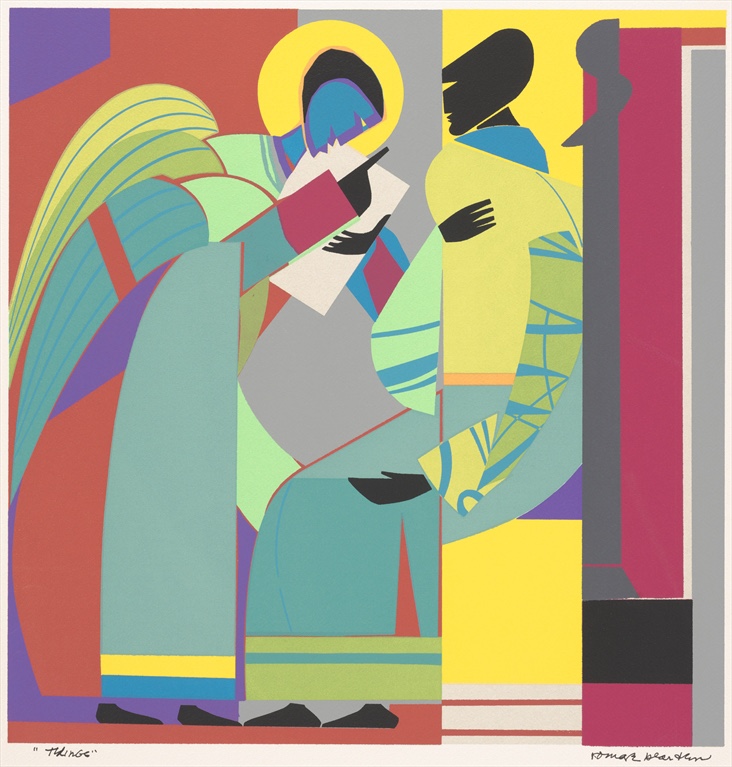
Tidings, ca. 1970
Mary asked the angel, “How will this be?” Luke 1:34
The Christmas story is unusual. Last week, I wrote about God doing something out of the ordinary with Zechariah and Elizabeth, the couple who would raise John the Baptist—the one set apart to prepare the way for Jesus. Now, God sends an angel to Mary.
With Mary, we get another question in the Christmas story. “How will this be?” Or, “How can this happen?” Mary goes on to literally say, “Since I have not known a man?” There is a “usual way” of a child being conceived and born. God chooses a one-of-a-kind way. God’s Holy Spirit will “overshadow” Mary—the Greek word is a word that also gets used in Acts 1:8–“You will receive power when the Holy Spirit comes upon you.” Then, to emphasize the unusual ways of God’s work, the angel tells Mary that her relative Elizabeth is going to have a child, even in her old age. As if to say, “God is doing a lot of strange things!”
Mary isn’t the only one to ask the question, “How can this happen?” In the gospel of John, there’s the story of a man named Nicodemus, who asks that kind of question, not once, but twice. Is it out of that conversation with questions that Jesus says these famous words: “For God so loved the world that He gave His one and only Son, that whoever believes in Him shall not perish, but have eternal life.”
Because we tell and re-tell the Christmas story every year, it can be easy to gloss over the unusual parts of the story. We can miss the fact that the characters in the center of the Christmas story had real questions! As we share this story with our family, neighbors, co-workers and classmates, let’s not dismiss the fact that they might have questions! “How could God become one of us?” The “how” is certainly hard to explain. The “why” is simpler: Because of His great love for us.
Let’s not miss the wonder and miracle of all of this.
Grace and peace,
David
 david j burke