I’ve Got Questions: What is His Name?
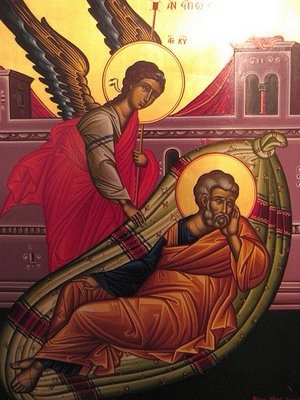
The Angel Tells Joseph In a Dream…

What is His Name?

“Mary will bear a son, and you shall call his name Jesus, for he will save his people from their sins.” Matthew 1:21

Names were important in the Bible.  Often they associated someone with their family heritage.  God often told the prophets to name their children as a message—Isaiah named one of his children, “A remnant shall return.”  Here, an angel tells Joseph to name this child Jesus—which means “The Lord saves.”  

There are three questions we’ve looked at so far in this Advent series:  

“How can I be sure?”—asked by Zechariah

“How will this be?”—asked by Mary

“Where is he?”—asked by the Magi

These are the questions of our neighbors, co-workers, and classmates who may not know of Jesus, or are not seeking to follow Him.  Let’s recall:  before any of us took a step of faith, we wanted to be sure, we wanted to understand how it all works, and we wanted to know where to go.  The questions asked in the Christmas story are our questions too.  

The “what” of the name Jesus answers the “Why.”  God sent Jesus into the world to save.  Some of us might feel we don’t need saving, but we do.  The things we’ve done and said, the things done to us that we can’t fix.  The things we regret and have left undone.  All of us need rescue from the rumination about what might have been.    

This Christmas season, let’s remember the name—His Name is Jesus.  Let’s remember the why.

Grace and peace,

David

I’ve Got Questions: Where is He?

Rembrandt, 1632

“Where is he who has been born king of the Jews?” Matthew 2:12

“Where are you, God?”  This might be one of the quintessential questions of the human condition.  We ask it in times of uncertainty and sadness.  We ask it in times where we need wisdom and assurance.  We ask it because we cannot see God face-to-face, or we cannot feel His presence.  

The Christmas story records this question too.  But the people asking it WOULD indeed see God face-to-face. It is a group of Magi—traditionally called Wise Men—traveling from another country and culture, asking where they can find the newborn king, so they can pay homage and present gifts to Him.  They literally wanted to know the place and time.  And they found Him, lying in a manger.  The Magi glimpsed the good news of the gospel—that God Himself would come to us in Jesus Christ from the heavenly places, giving up glory and experiencing the joys and sorrows of being human.  He came to save us, and it all started in an unlikely place.

Let’s be honest:  in the busyness of this season, it can be easy to lose sight of God.  It is possible to fill our calendars and to-do lists with so much that we might ask, “Where is God in all of this?”  

The answer is:  you can find God in the story of Christmas.   God so loved the world that He sent His one and only Son.  Born in Bethlehem, born in a manger.   When humanity was crying out to find God, God came to find us.  

Grace and peace,

David

I’ve Got Questions: How Will This Be?

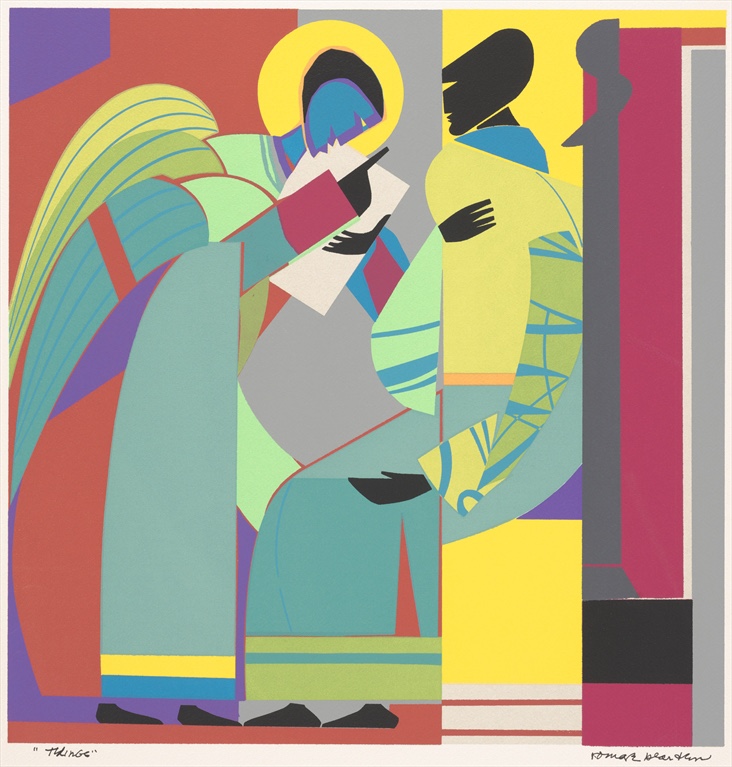
Romare Bearden (American, 1911-1988)
Tidings, ca. 1970

Mary asked the angel, “How will this be?” Luke 1:34

The Christmas story is unusual. Last week, I wrote about God doing something out of the ordinary with Zechariah and Elizabeth, the couple who would raise John the Baptist—the one set apart to prepare the way for Jesus. Now, God sends an angel to Mary.

With Mary, we get another question in the Christmas story. “How will this be?” Or, “How can this happen?” Mary goes on to literally say, “Since I have not known a man?” There is a “usual way” of a child being conceived and born. God chooses a one-of-a-kind way. God’s Holy Spirit will “overshadow” Mary—the Greek word is a word that also gets used in Acts 1:8–“You will receive power when the Holy Spirit comes upon you.” Then, to emphasize the unusual ways of God’s work, the angel tells Mary that her relative Elizabeth is going to have a child, even in her old age. As if to say, “God is doing a lot of strange things!”

Mary isn’t the only one to ask the question, “How can this happen?” In the gospel of John, there’s the story of a man named Nicodemus, who asks that kind of question, not once, but twice. Is it out of that conversation with questions that Jesus says these famous words: “For God so loved the world that He gave His one and only Son, that whoever believes in Him shall not perish, but have eternal life.”

Because we tell and re-tell the Christmas story every year, it can be easy to gloss over the unusual parts of the story.  We can miss the fact that the characters in the center of the Christmas story had real questions! As we share this story with our family, neighbors, co-workers and classmates, let’s not dismiss the fact that they might have questions!  “How could God become one of us?”  The “how” is certainly hard to explain.  The “why” is simpler:  Because of His great love for us.

Let’s not miss the wonder and miracle of all of this.  

Grace and peace,

David

I’ve Got Questions: How Can I Be Sure?

Zechariah asked the angel, “How can I be sure of this? Luke 1:18

The Christmas story should raise a lot of questions!  Think about this:  Christmas is a celebration of the God who made all things becoming human, born to an unmarried couple, and dwelling among us.  Christmas is a celebration of Jesus, the Son of God, who is “God With Us.”  As God would plan this, He sent an angel to a very old priest named Zechariah, to tell him that he and his wife Elizabeth would also have a son.  This child, named John, would be the one who would prepare the way for Jesus.  

Zechariah has questions!  Wouldn’t you?  His age and history of not being able to have children with Elizabeth must have made him wonder.  

As we begin our series this Advent, preparing our hearts and lives for God With Us, let us notice in the Bible that it is ok to have questions.  Some may say, “Wait a minute, Zechariah asked a question, and he got struck with silence!”  [Read the rest of the story] Perhaps.  To be sure, many biblical commentators say it may have been a punishment for disobedience.  But Mark Pickens writes, 

Perhaps Zechariah’s temporary impairment was not a punishment given, but a sign bestowed of the promise of God’s divine fulfillment not only in the birth of John, but in the upcoming birth of the Messiah…Is it possible that Zechariah’s impairment was a promise of the greatness of John, and the coming glory of Messiah…. rather than a punishment?”

After all, Jesus would later say of a man’s blindness that it was NOT a result of the man’s sin, or even his parents’, but so that the glory of God might be revealed.

I think I am intrigued the Zechariah’s silence in a way I haven’t been before. After all, in about a month, I step away from a role in which I have spoken to hundreds of people every week. I’ve been doing that kind of work for over twenty years. I will be moving into a role of listening, coaching, and caring. More silence, less speaking. I wrote about this recently here : https://davidjburke.com/. Look for the post titled, “A New Thing.”

It is only human, I think, to ask questions about a story so wonderful and mysterious. How can we be sure that God loves us so much that He became one of us? Maybe the best posture we can begin to imitate is Zechariah’s: to be silent, waiting, wondering, watching for signs of God this Christmas season. Amidst the noise and chaos that can come this season, let us slow down, be more quiet, wonder a bit more, and rejoice in the story of Christmas again.

Grace and peace,

David